
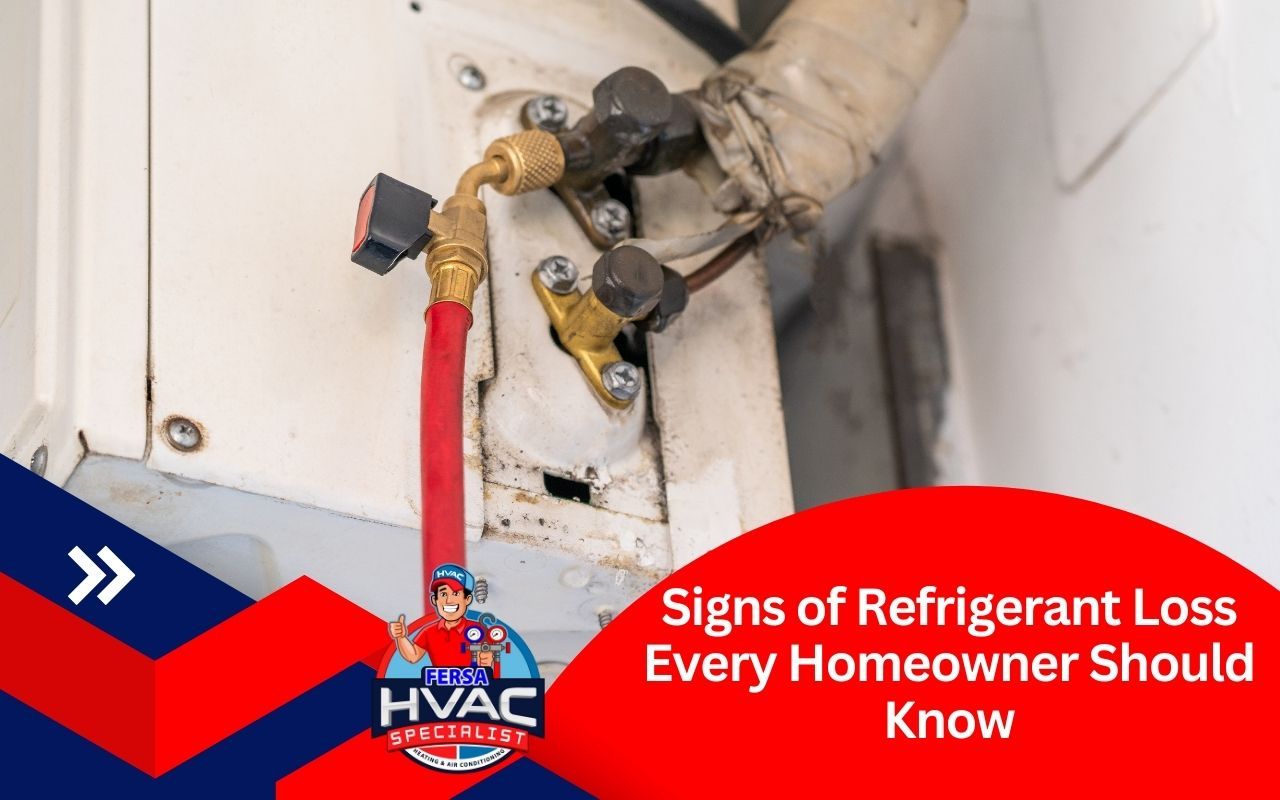
Signs of Refrigerant Loss Every Homeowner Should Know
Refrigerant is the lifeblood of your air conditioning system. When levels drop, your AC struggles to keep your home cool, and the risk of system damage increases. Knowing the early signs of refrigerant loss can save you from expensive repairs and sudden breakdowns, especially during the hottest months in Texas.
At FERSA HVAC Heating & Air, we help homeowners across Mesquite, Garland, and Plano catch refrigerant issues early. From weak airflow to ice buildup, here’s what to watch for and how to fix it before it turns into a larger problem.
Why Refrigerant Loss Happens
AC refrigerant doesn’t get “used up” like gas in a car—it stays in a sealed system. So if levels are dropping, it’s almost always due to a leak. These leaks often form over time and are tied to the common causes of AC leaks, such as corroded coils, loose connections, or physical damage to refrigerant lines. In homes across Richardson, Carrollton, and Farmers Branch, we frequently find leaks caused by aging systems or improper installations.
Common Signs of Refrigerant Loss
If your AC is low on refrigerant, your system will start showing symptoms—some subtle, others more obvious. One of the most noticeable signs is reduced cooling. Your AC might run longer, work harder, and still fail to reach your desired temperature. In places like Allen and McKinney, homeowners often first notice this during hot afternoons when the system can’t keep up.
Another red flag is ice buildup on the evaporator coil or refrigerant lines. When refrigerant is low, the coil can freeze over and eventually melt—leading to water damage. You might also hear hissing or bubbling noises near the outdoor unit, which often point to a leak in the refrigerant lines. If your energy bills spike with no clear reason, your system may be compensating for refrigerant loss by running overtime.
What to Do If You Suspect a Leak
If you’re experiencing any of the above issues, the best step is to turn off your system and call a professional. Continuing to run your AC while low on refrigerant can cause permanent compressor damage, which is one of the most expensive parts to replace.
At FERSA HVAC, we offer fast diagnostics and emergency AC repair in Mesquite and the surrounding areas. Our technicians use tools like electronic leak detectors and UV dye to locate leaks precisely and safely. Once the leak is repaired, we recharge the system with the correct refrigerant type and amount to restore full performance.
How to Prevent Future Leaks
While some leaks result from old equipment, others can be avoided through proper maintenance. We recommend regular inspections to catch early signs of corrosion, check refrigerant pressure, and ensure all connections are sealed. Homeowners in Rowlett, Seagoville, and Princeton benefit from following the best HVAC maintenance checklist, including filter changes, coil cleanings, and spring tune-ups.
Routine maintenance doesn’t just improve performance—it helps prevent many of the common causes of AC leaks that lead to refrigerant loss in the first place.
FAQs – Signs of Refrigerant Loss
Can low refrigerant damage my AC?
Yes. If ignored, it can overheat your compressor and lead to full system failure.
How often should refrigerant be checked?
During annual tune-ups, technicians should always check refrigerant levels and pressure.
Is adding refrigerant a permanent fix?
No. It’s only temporary unless the leak is located and repaired properly.
Suspect a Refrigerant Leak? FERSA HVAC Is Ready to Help
If you notice reduced cooling, ice buildup, or unusual sounds, don’t wait. These are all signs of refrigerant loss, and early detection can save you money and protect your system. FERSA HVAC Heating & Air serves homeowners in Mesquite, Dallas, Allen, and beyond with expert diagnostics and fast repairs.
Contact us today to schedule a refrigerant check or AC inspection.