
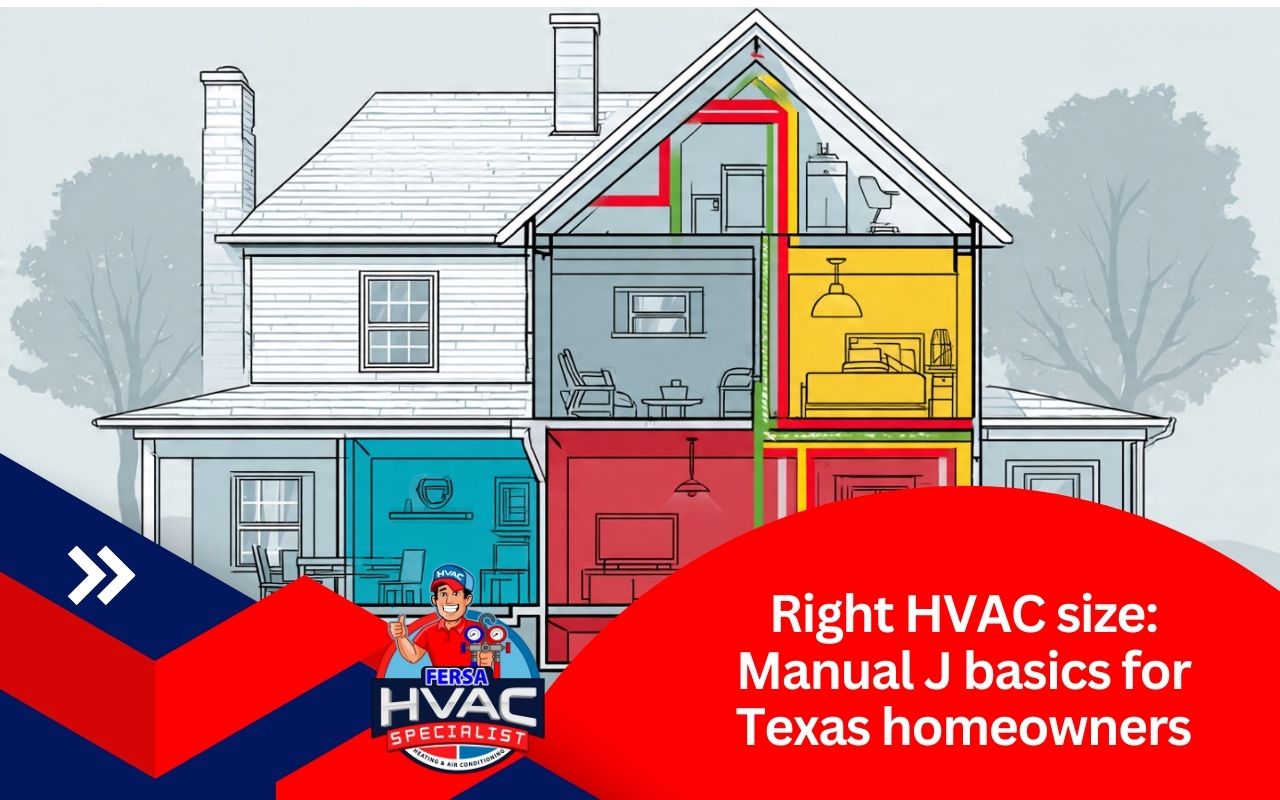
Right HVAC size: Manual J basics for Texas homeowners
Right-sizing your HVAC: Manual J basics for Texas homeowners helps improve comfort and energy use in Texas homes. Because temperatures swing fast, a system that is too big or too small wastes power and feels uneven. FERSA HVAC Heating & Air often sees this in real homes.
Right-sizing your HVAC: Manual J basics for Texas homeowners uses a clear load calculation to match your home. As a result, you can lower bills, protect equipment, and stay comfortable year-round.
Why Right-sizing your HVAC: Manual J basics for Texas homeowners matters
When HVAC sizing fits your home, airflow stays steady and rooms feel consistent. However, wrong sizing can cause short cycling, humidity issues, and higher repairs. Manual J basics replace guessing with measured load calculation for Texas homes.
- More stable temperatures across rooms
- Better humidity control in sticky weather
- Less wear from constant cycling
- Cleaner air from balanced run times
Common HVAC sizing mistakes to avoid
Many homeowners rely on square footage alone. Yet windows, insulation, ceiling height, and shade change the real load calculation. Also, adding a big “safety margin” can oversize equipment. Over time, renovations and occupancy shifts can change HVAC sizing needs, so updates matter.
Manual J load calculation overview
Right-sizing your HVAC: Manual J basics for Texas homeowners starts with Manual J, a method used to estimate heat gain and heat loss. It uses climate data, home materials, and room details to guide HVAC sizing. FERSA HVAC Heating & Air uses this approach to reduce guesswork.
Key factors in Manual J basics
- Local Texas climate and humidity levels
- Insulation, walls, roof, and attic ventilation
- Windows, doors, orientation, and sun exposure
- Air leaks, duct condition, and room zoning
- People, lighting, and appliance heat
Simple steps for a load calculation
Accurate measurements come first. Next, climate values for your Texas city shape the model. Then, inputs like insulation and windows refine the totals. Finally, the report shows the heating and cooling load for each zone.
- Measure rooms, ceilings, windows, and doors
- Gather local design temperatures and humidity
- Enter materials, insulation values, and leakage details
- Add internal gains from people and appliances
- Review zone totals and whole-home results
How to read Manual J results
The report shows loads in BTU per hour, including sensible and latent load. These numbers guide tonnage and airflow. Still, avoid big “padding,” since it can trigger short cycling. Instead, compare results to equipment charts, and choose capacity that matches the real demand.
Benefits of a properly sized system
With correct HVAC sizing, the system runs in smoother cycles and holds temperature better. Consequently, noise drops and comfort rises. In Texas homes, proper moisture control can also reduce mold risk. Over the long run, accurate load calculation supports longer equipment life and fewer surprise repairs.
DIY vs. professional Manual J help
DIY tools can offer a rough starting point. However, they often miss air leaks, mixed insulation, and complex layouts. FERSA HVAC Heating & Air can inspect your home, verify inputs, and refine HVAC sizing for your climate.
- DIY: useful for learning and simple layouts
- Professional: better accuracy and on-site checks
- Best path: use DIY to understand, then verify
Hiring an HVAC professional in Texas
Right-sizing your HVAC: Manual J basics for Texas homeowners works best when a technician measures carefully and explains the report. Ask what software they use and what data sources they follow. For a deeper next step, explore HVAC services for proper sizing and review more guidance in the Texas HVAC blog. FERSA HVAC Heating & Air can also help you act on the findings.
Frequently Asked Questions
What are Manual J basics in plain language?
Manual J basics are a structured way to estimate heat gain and heat loss. It replaces rule-of-thumb sizing with a clear load calculation.
Does HVAC sizing depend on more than square footage?
Yes. Windows, insulation, shade, ceiling height, and air leaks can change the load calculation and the right equipment size.
Why does an oversized system feel uncomfortable?
It can cool fast and shut off early. As a result, humidity may stay high and temperatures can swing between cycles.
How often should I update a load calculation?
Update it after major changes, like new windows, added rooms, or insulation upgrades. These can shift HVAC sizing needs.
Can one system size work for every Texas home?
No. Texas homes vary in layout, insulation, and sun exposure. Therefore, Manual J results should be tailored to your space.
Achieving Optimal Comfort and Efficiency
Right-sizing your HVAC: Manual J basics for Texas homeowners helps you avoid common sizing errors and improve comfort. With accurate load calculation, Texas homes can run more efficiently and protect equipment. For practical support, connect through the contact page for Manual J help. FERSA HVAC Heating & Air can guide the process from start to finish.