
Detecting Low Refrigerant Symptoms: A DIY Guide to Comfort
When it comes to maintaining home comfort, few things are as essential as a well-functioning air conditioning system. However, low refrigerant symptoms can disrupt your home’s climate. Recognizing these symptoms early helps prevent costly repairs and discomfort. Many homeowners overlook subtle signs, noticing issues only when the AC struggles. A slight drop in refrigerant can trigger multiple problems, including higher energy bills and reduced lifespan of your unit. By spotting issues like unusual noises or ice formation, you maintain control over your home’s temperature. For more insights on proper AC care, check our guide on common HVAC maintenance mistakes.
Importance of Maintaining Proper Refrigerant Levels
Energy Efficiency
Maintaining proper refrigerant levels ensures optimal energy efficiency. When levels are correct, your AC operates smoothly without straining components. Low refrigerant symptoms force the compressor to work harder, increasing energy consumption. Regular checks reduce utility bills and improve overall system performance.
Equipment Longevity
Proper refrigerant levels extend AC lifespan. Undercharged systems make the compressor work longer, causing premature wear. Addressing low refrigerant symptoms early protects components and prevents costly repairs or replacements. Ensure your AC runs efficiently and lasts longer by monitoring refrigerant regularly.
Consistent Cooling Performance
Maintaining correct refrigerant levels guarantees even cooling. Low refrigerant symptoms can cause uneven indoor temperatures and discomfort. Frequent overrides by homeowners can worsen AC performance. Keeping levels within specifications promotes a comfortable environment throughout your home.
Understanding the Role of Refrigerant in Your AC System
Refrigerant circulates through coils to absorb and release heat. In the evaporator coil, it evaporates into a low-pressure gas, collecting indoor heat. The compressor pressurizes the gas, which releases heat in the condenser coil outdoors. Deviations in refrigerant charge affect performance. Low refrigerant symptoms emerge when heat absorption drops, causing uneven supply and return air temperatures. Incorrect levels can also lead to coil freeze-ups and lubrication failures. Understanding this cycle shows why maintaining precise refrigerant is crucial.
Common Signs and Symptoms of Low Refrigerant Levels
Detecting low refrigerant symptoms early prevents major AC damage. Key signs include diminished cooling, ice on coils, and hissing noises near units. Uneven room cooling, frequent cycling, and higher bills are also indicators. These symptoms highlight underperformance and warn of potential compressor damage.
Impact of Low Refrigerant on AC Performance
Low refrigerant symptoms directly affect AC efficiency. Insufficient refrigerant causes frost buildup, reduces airflow, and forces longer compressor cycles. This leads to increased wear and higher energy costs. Moisture and air entering the system worsen component corrosion. Early detection is vital to prevent major failures.
DIY Methods to Detect Low Refrigerant Levels
Homeowners can spot low refrigerant symptoms with simple methods. Measure supply air temperature with a thermometer; a 15–20°F difference is normal. Frost on evaporator coils indicates undercharging. Hissing noises around refrigerant lines suggest leaks. Dye-based leak kits help identify visible leaks, though professional confirmation is recommended. For professional assistance, visit our contact page.
Steps to Safely Check Refrigerant Levels in Your AC Unit
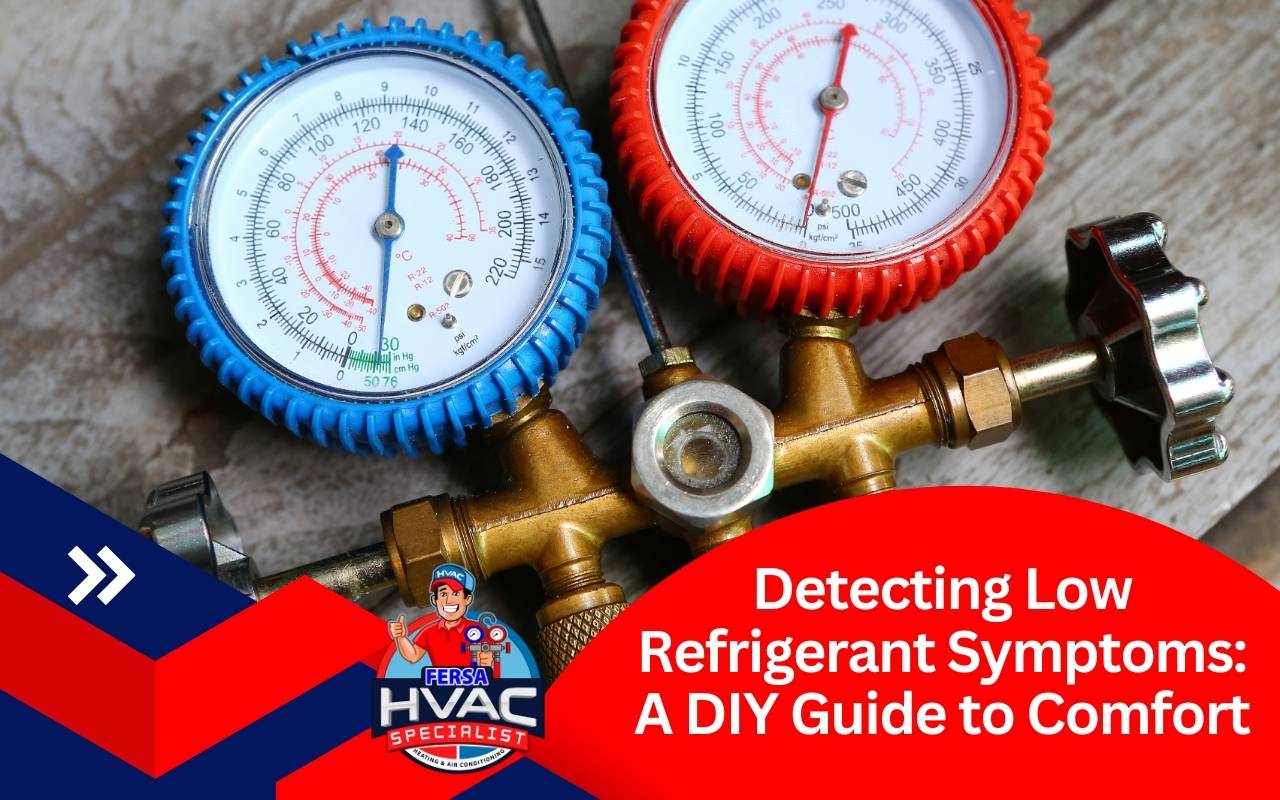
Turn off power at the breaker before inspecting refrigerant lines. Remove the service panel and attach manifold gauges to the access ports. Compare readings to manufacturer specifications. Pressures below range indicate low refrigerant. Avoid DIY recharges without proper training. If low refrigerant symptoms are observed, call a certified HVAC professional.
Addressing Low Refrigerant Issues: DIY vs. Professional Help
While early detection is possible at home, fixing leaks and recharging refrigerant require professional skills. Improper handling risks system damage and environmental harm. DIY recharge kits may mask symptoms but cannot fix underlying issues. Certified technicians perform thorough leak searches, remove moisture, and charge refrigerant accurately. Ensure a safe, complete repair by hiring a professional. Learn more about system overwork issues at this guide.
Preventive Measures to Maintain Optimal Refrigerant Levels
Biannual HVAC Inspections
Schedule inspections every spring and fall with a licensed technician. These visits ensure proper refrigerant charge, detect leaks, and address potential issues early. Technicians also clean coils, check electrical components, and test airflow, maintaining system efficiency and preventing low refrigerant symptoms.
Home Maintenance Practices
Replace air filters monthly, clear debris around outdoor units, and ensure airflow around vents. Prevent coil freeze-ups and reduce compressor strain. Simple maintenance supports AC performance and minimizes the risk of refrigerant leaks.
Prompt Attention to Issues
Address unusual noises or cooling inconsistencies immediately. Early action prevents refrigerant leaks and more serious system problems. Homeowners should monitor AC behavior and schedule routine tune-ups for long-term efficiency.
Troubleshooting Other AC Problems Related to Low Refrigerant
Some symptoms overlap with other issues, like clogged filters or dirty coils, which mimic low refrigerant symptoms. Inspect airflow, vents, and thermostat calibration. Persistent frost or poor cooling usually indicates a refrigerant problem. Electrical faults may also affect performance. Comprehensive inspections often reveal multiple minor issues contributing to symptoms.
Frequently Asked Questions
What are the common low refrigerant symptoms to watch out for?
Low refrigerant symptoms include warm air from vents, ice buildup on refrigerant lines, and increased electricity bills due to system strain.
How can I detect low refrigerant symptoms at home?
Check for insufficient cooling, listen for hissing sounds near the AC unit, and inspect refrigerant lines for visible leaks.
Is it safe to DIY diagnose low refrigerant symptoms?
DIY diagnosis is possible, but consulting a professional ensures safety and accurate assessment of low refrigerant symptoms.
What are the risks of ignoring low refrigerant symptoms?
Ignoring these symptoms can damage the compressor, reduce cooling efficiency, and increase long-term repair costs.
How can I prevent low refrigerant symptoms in my AC unit?
Regular maintenance, prompt leak repairs, and monitoring refrigerant levels help prevent low refrigerant symptoms and keep your AC efficient.
Ensuring Longevity and Efficiency of Your AC System
Monitor and detect low refrigerant symptoms early to maintain comfort and energy efficiency. Understand refrigerant function, recognize warning signs, and act swiftly. Combine homeowner vigilance with professional maintenance for reliable, long-lasting AC performance. Keep an eye on subtle changes and schedule routine tune-ups to protect your cooling system’s core.