
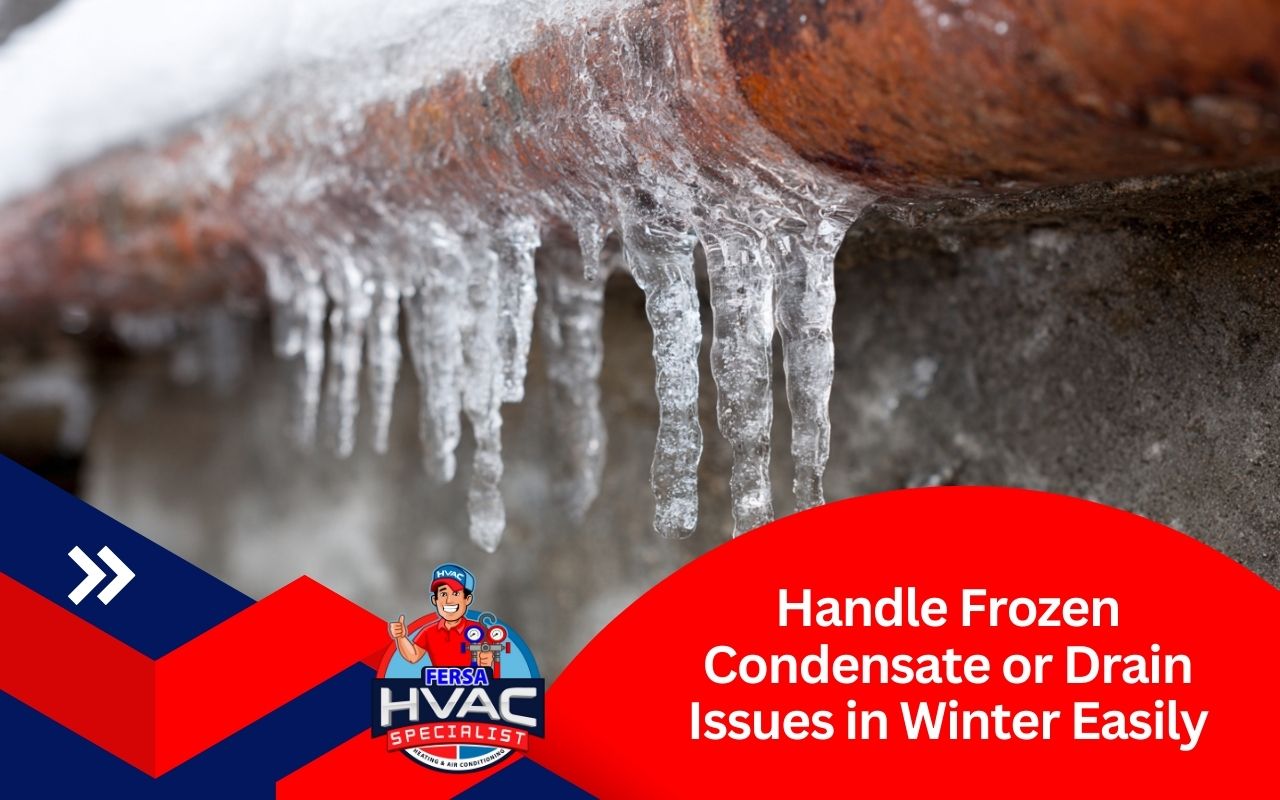
Handle Frozen Condensate or Drain Issues in Winter Easily
Frozen Condensate or Drain Issues in Winter often catch Dallas homeowners off guard when cold air finally arrives. A frozen condensate line can stop your system, leave rooms chilly, and even cause indoor leaks that damage floors and walls.
However, these problems do not have to feel overwhelming. With a little guidance and simple habits, you can protect your HVAC equipment. By understanding what happens inside the drain and planning ahead, you keep comfort stable and avoid rushed emergency calls during the coldest nights.
Common Causes of Frozen Condensate Lines
When temperatures drop below freezing, water in the drain pipe can turn to ice and block the flow. If the line runs through a garage, attic, or crawl space, the cold surrounding air makes freezing more likely. Dirt, mold, or algae inside the pipe also slow drainage and leave water sitting in place.
- Lack of insulation around long or exposed drain runs.
- Poor pipe slope that allows water to pool instead of flow away.
- Clogs from dust, mold, or algae inside the drain line.
- Unheated spaces that expose plastic pipes to freezing air.
In addition, restricted airflow in the HVAC unit can create extra moisture. Dirty filters or blocked vents make the system work harder and produce more condensation. When that water cannot leave the line quickly, it can freeze overnight and trigger more winter HVAC problems, including safety shutdowns.
Signs and Symptoms of a Frozen Drain
Recognizing Frozen Condensate or Drain Issues in Winter early helps prevent water damage and longer outages. You may notice puddles around the furnace, water dripping from panels, or a damp smell near the indoor unit. These signs often point to a backup caused by ice inside the drain line.
Unusual sounds are another warning. Gurgling or bubbling from the drain shows trapped water fighting to move past an ice plug. Many modern systems include overflow switches that turn the unit off when water rises too high. Without a timely condensate drain fix, that safety feature can leave your home without heating or cooling until the drain is clear.
Prevention Techniques for Frozen Condensate Issues
You can prevent Frozen Condensate or Drain Issues in Winter by preparing your system before the first cold front. First, check that the drain line has insulation, especially where it passes through attics, garages, or crawl spaces. Foam sleeves or approved heat tape help keep water moving instead of freezing inside the pipe.
- Add insulation to exposed sections of the drain line.
- Seal gaps where cold outdoor air reaches the pipe.
- Confirm the line slopes gently downward toward the exit point.
- Keep the area around the furnace clear for easy inspections.
Next, flush the drain regularly with a mild mix of water and bleach. This simple step reduces algae and mold growth, which keeps water flowing freely. For extra guidance on seasonal preparation, explore the helpful articles in our HVAC tips blog and apply the advice that best fits your home layout.
Thawing Out a Frozen Condensate Line Safely
If you find ice inside the line, use gentle heat so you avoid damaging plastic parts. Never pour boiling water into the pipe, because sudden temperature changes can cause cracks. Instead, apply warm water slowly or use a hair dryer set to low, keeping the air moving along the line.
When you feel unsure, it is safer to call a professional for help. A trained technician can apply heat blankets, use steam tools, and check for hidden damage after the ice melts. Once the line is open again, they may run water through the pipe to confirm proper drainage and suggest improvements that prevent another freeze.
DIY Maintenance Tips for Winter HVAC Care
Simple tasks at home help avoid Frozen Condensate or Drain Issues in Winter and keep comfort steady. Start by replacing air filters every one or two months, especially during heavy use. Clean filters improve airflow, which reduces excess moisture on the coils and lowers the chance of water collecting in the drain pan.
- Replace or clean air filters on a regular schedule.
- Keep supply and return vents open and clear of furniture.
- Look for moisture, frost, or rust near the furnace base.
- Note any new noises or smells and address them quickly.
Additionally, perform a quick visual check around the system once a month. Look for wet spots, ice on lines, or water stains on nearby surfaces. Catching these early clues allows you to schedule service before a small concern becomes a bigger repair.
Importance of Regular HVAC Inspections in Winter
Professional inspections are an important part of smart heating maintenance. During a winter tune-up, a technician tests the condensate drain, checks coils, and confirms that safety switches work correctly. They also review system performance to ensure the equipment heats your home without overworking or wasting energy.
Moreover, the visit usually includes checking refrigerant levels, tightening electrical connections, and cleaning key components. These steps improve reliability and can reduce surprise breakdowns on cold nights. When you are ready to plan your next visit, schedule an appointment through the FERSA HVAC contact page and choose a time that fits your routine.
Professional Solutions for Persistent Drain Problems
Sometimes, home steps are not enough to clear repeated clogs or ice. In those cases, licensed HVAC technicians can replace damaged pipe sections, upgrade insulation, or install a small pump to move water more effectively. They also verify that the drain route avoids cold spots that invite freezing.
In addition, professionals may reroute the line, add backup drain pans, or adjust vents to improve airflow and reduce moisture. By booking support with experienced specialists, you gain tailored solutions instead of guesswork and enjoy long-term protection against future drain issues.
Ensuring Proper Drainage in Cold Weather
Good drainage starts with correct pipe slope. The condensate line should angle gently downward so water never sits still. If sections of the pipe sag or flatten, pooled water can freeze during a cold snap and block the entire line.
Adding foam insulation or safe electrical heat tape along exposed runs can help keep the pipe above freezing. In unheated corners, a small, thermostatically controlled heater near the drain area can also make a difference. Together, these improvements help the line stay clear and ready through each cold night.
Troubleshooting Other Winter HVAC Concerns
Drain issues are only one part of winter comfort. Coils on heat pumps can also freeze, which reduces efficiency and increases energy use. Keeping coils clean and confirming proper refrigerant levels help reduce frost buildup and support steady heating.
- Listen for grinding, squealing, or rattling sounds from motors.
- Check that the thermostat reads indoor temperatures accurately.
- Consider upgrading to a smart thermostat for better control.
- Watch for frequent system cycling that might signal a deeper problem.
Thermostat glitches are another frequent concern. Recalibrating or replacing an older device can smooth out uneven temperatures and avoid constant system cycling. For continuing education on seasonal care, you can also review new posts added to the FERSA HVAC services page to see which options match your home’s needs.
Frequently Asked Questions
How do I know if my condensate drain is frozen?
Look for puddles near the furnace, water dripping from panels, strange gurgling sounds, or sudden system shutdowns. These signs often point to ice or blockages in the drain line that stop normal water flow.
Can I safely thaw a frozen drain line myself?
You can try gentle methods such as warm water or a hair dryer on low, keeping the heat moving. However, if the pipe is hard to reach or you feel unsure, contact a qualified technician to avoid accidental damage.
How often should I flush the condensate line?
Flushing the line with a mild bleach and water mix every month during heavy use is a helpful habit. This quick step reduces algae and mold buildup so water drains smoothly and is less likely to freeze.
Will regular HVAC tune-ups really prevent winter drain problems?
Yes, routine checkups give technicians a chance to spot small issues before they grow. During a tune-up, they review the drain line, clean components, and test safety switches, all of which reduce the risk of winter drain and moisture troubles.
What should I do if my heat stops during a freeze?
First, check your thermostat settings and filter, and look for visible leaks or ice. Then, if the system still will not run, reach out through the FERSA HVAC contact page so a technician can inspect the equipment and restore comfort.
Mastering Winter HVAC Maintenance
With a balanced plan of home checks and expert support, you can manage Frozen Condensate or Drain Issues in Winter and keep repair stress low. Clean filters, clear drains, and timely inspections work together to protect both comfort and equipment.
By staying alert to early warning signs and taking action quickly, you reduce the risk of surprise outages. As a result, your home stays warm, efficient, and ready for every cold front that arrives in the Dallas area.