
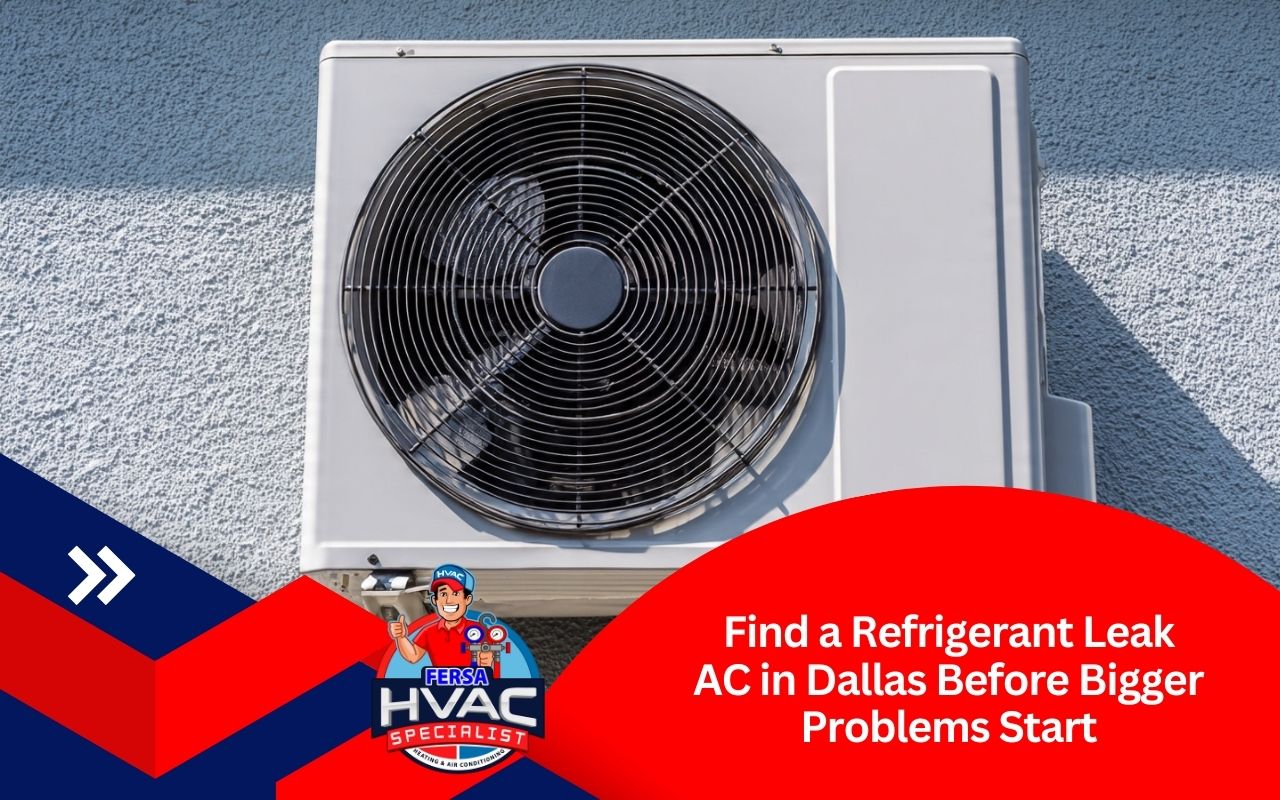
Find a Refrigerant Leak AC in Dallas Before Bigger Problems Start
When your system runs all day but your home still feels warm, the issue may be a refrigerant leak AC in Dallas. FERSA HVAC Heating & Air helps homeowners notice early warning signs, protect comfort, and avoid higher energy bills during long and hot Dallas summers.
You may hear a soft hissing sound, feel weak airflow, or notice rooms that do not cool well. These signs matter because fast action can protect your system, lower stress on parts, and keep cooling more steady.
Common Warning Signs That Point to a Refrigerant Leak Problem
A refrigerant leak AC in Dallas often starts with small but clear changes. You may feel warm air from vents, weak airflow, or longer cooling cycles. In many homes, the unit keeps running, yet the indoor temperature stays too high.
Another common clue is an AC hissing sound refrigerant leak. You may also see frost on the coil, ice on the lines, or water near the indoor unit after that ice melts. FERSA HVAC Heating & Air recommends checking these signs early to stop bigger damage.
- Warm or room-temperature air from vents
- Long run times with poor cooling
- Ice on refrigerant lines or coils
- Higher energy bills without clear reason
How Low Refrigerant Changes Daily Cooling and Energy Use
Low refrigerant makes your unit work harder to cool each room. As a result, the compressor and blower stay on longer, cooling becomes uneven, and indoor air may feel sticky. This is why many people notice AC not cooling but running at the same time.
Over time, signs of low refrigerant in AC can lead to more wear on key parts. FERSA HVAC Heating & Air often sees higher power bills, louder operation, and more sudden breakdowns when leaks are not repaired quickly.
Why Fast Repair Matters During Long and Hot Dallas Summers
Dallas heat can turn a small leak into a big comfort problem in a short time. Because systems run for many hours, a refrigerant leak AC in Dallas can quickly reduce cooling power and make your home feel uncomfortable.
Fast service also helps you avoid more costly damage. If the system keeps running with low refrigerant, the compressor may overheat. For that reason, many homeowners choose air conditioning repair in Dallas TX for cooling problems as soon as warning signs appear.
- Protects the compressor from extra stress
- Helps keep cooling more even
- May lower future repair costs
- Supports better comfort during heat waves
Simple Home Checks You Can Do Before Calling Experts
You can start with a careful visual check around the lines, coils, and connections. Look for oily spots because refrigerant can leave oil marks near the leak area. Also, listen for a soft hissing noise near the unit.
Some homeowners use a soap and water mix on joints to see if bubbles form. Even so, deeper testing should be left to FERSA HVAC Heating & Air because safe handling matters, especially when a refrigerant leak AC in Dallas is suspected.
- Turn the system off before checking
- Look for frost, oil marks, or water
- Listen for a light hissing sound
- Write down all symptoms you notice
What To Do Next When You Suspect an AC Leak
First, turn the system off to reduce added strain. Running it with low refrigerant can harm the compressor and make repair more difficult. Then, note the main symptoms, such as warm air, ice buildup, or an AC hissing sound refrigerant leak.
After that, contact FERSA HVAC Heating & Air for help. You can also review HVAC repair in Dallas TX for home comfort issues or explore HVAC services in Dallas for repair and maintenance to find the right solution for your system.
Choosing the Right AC Team for Leak Repair in Dallas
Good service starts with trained and licensed technicians who know local needs. FERSA HVAC Heating & Air encourages homeowners to look for clear communication, written estimates, and service backed by strong workmanship.
It also helps to choose a team with experience in refrigerant leak repair in Dallas. Reviews, response times, and honest answers can tell you a lot. In Dallas heat, quick and dependable support makes a real difference.
Repair Costs, Long-Term Value, and Ways To Prevent Future Leaks
Repair cost depends on the leak location, refrigerant type, and labor needed. Small and easy-to-reach leaks often cost less, while hidden issues near coils or inside the cabinet may take more time. A detailed estimate helps you understand the full job.
Prevention also matters. Regular maintenance, clean filters, and clear space around the outdoor unit can reduce wear and protect performance. With routine care from FERSA HVAC Heating & Air, a refrigerant leak AC in Dallas may be found earlier before it becomes a larger repair.
Frequently Asked Questions
What are the most common signs of low refrigerant in AC?
Common signs include warm air from vents, weak airflow, ice on the lines, high energy bills, and longer cooling cycles. Many homes also show poor humidity control and uneven room temperatures.
Can an AC hissing sound refrigerant leak mean the system is unsafe?
A hissing sound can point to a small hole or crack in the refrigerant line. While the sound alone does not explain the full issue, it should be checked quickly by a trained technician.
Why is my AC not cooling but running all day?
This can happen when refrigerant is low, airflow is blocked, or parts are under stress. If the unit runs without cooling well, a leak is one possible cause that needs inspection.
How quickly should I schedule refrigerant leak repair in Dallas?
You should schedule service as soon as you notice the warning signs. Quick repair helps protect the compressor, improve comfort, and reduce the risk of larger system damage.
Who should I contact for AC service in Dallas, TX?
You should work with a trusted local team that understands cooling issues in Dallas homes. To speak with FERSA HVAC Heating & Air, visit the contact page for AC help in Dallas.
Protect Your Comfort and Keep Your AC Working Better Longer
When you act early, your system has a better chance to stay efficient and reliable. FERSA HVAC Heating & Air helps homeowners respond to warning signs, reduce stress on important parts, and keep indoor comfort more stable.
From simple checks to expert diagnosis, the right steps can prevent bigger problems later. If you notice strange sounds, weak cooling, or ice on the unit, professional care can help restore comfort and support a longer system life.