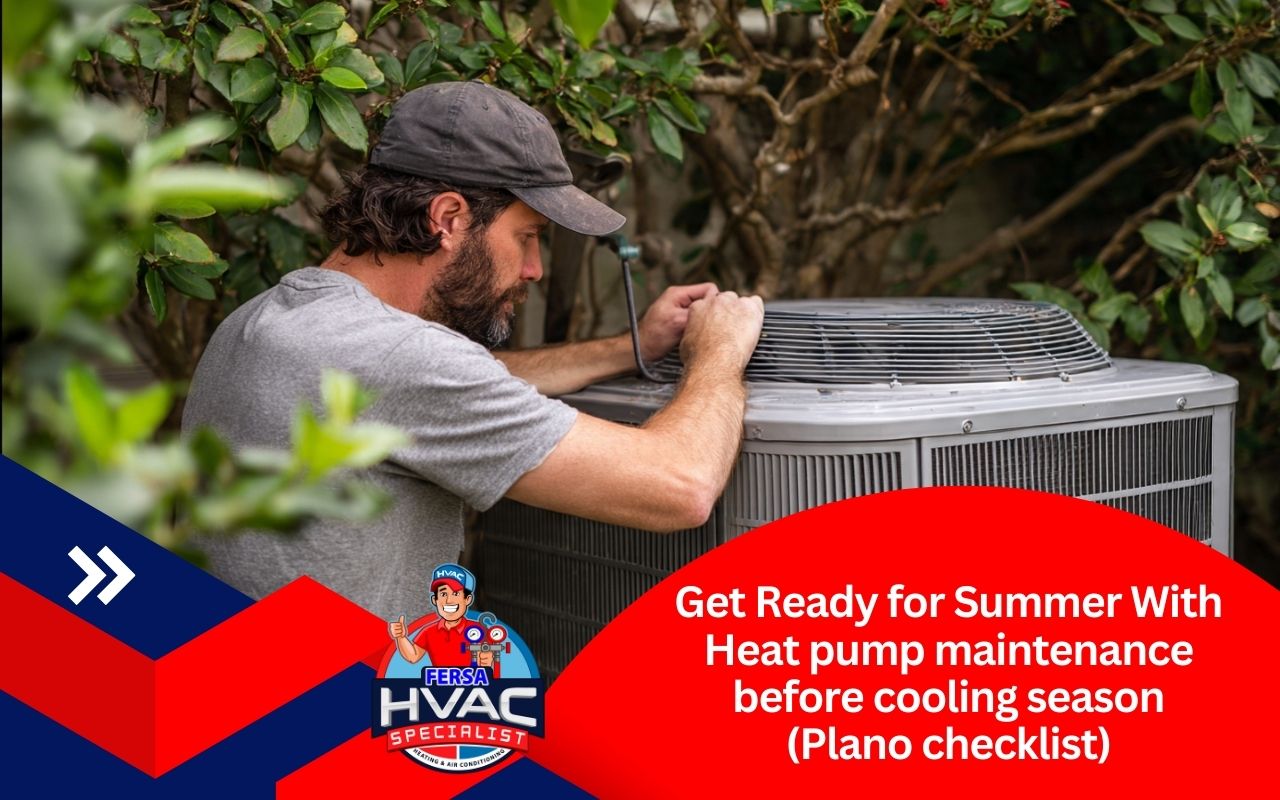
Get Ready for Summer With Heat pump maintenance before cooling season (Plano checklist)
Preparing your home for the hottest days is as important as any summer plan. Because of that, this Heat pump maintenance before cooling season (Plano checklist) helps you stay comfortable and efficient. If you skip it, you may face surprise breakdowns or higher bills.
Therefore, focus on small steps, like outdoor unit care and simple setting checks. These quick tasks can stop minor issues from growing. As a result, you won’t be stuck during a heatwave, calling for urgent help. With FERSA HVAC Heating & Air, planning ahead feels simple.
Why Heat pump maintenance before cooling season (Plano checklist) matters
First, Heat pump maintenance before cooling season (Plano checklist) protects comfort when temperatures jump. Also, a well-kept unit uses less power and holds steady temperatures. When you follow a clear pre-season checklist, you can catch small problems early.
For example, clogged filters or loose connections can lead to bigger failures. In addition, a Plano checklist keeps steps in order, which supports system life and reliability. If you want guided support, explore FERSA HVAC Heating & Air options on the HVAC services page.
- Lower energy waste, so monthly costs stay steadier
- Fewer surprise shutdowns, especially during heatwaves
- Longer system life, because parts face less strain
- More even cooling, which improves daily comfort
Outdoor unit care: inspection and light cleaning
Start outdoor unit care by clearing leaves, grass, and dirt around the unit. Ideally, keep about two feet of open space on all sides. This helps airflow, so the system runs with less effort. Also, rinse coils gently with a garden hose when needed.
Next, look at fan blades for buildup. If you see small bends, straighten them with a fin comb. Then, wipe blades with mild soap and water. Finally, check the base for rust or warping. If anything looks serious, FERSA HVAC Heating & Air can help.
- Remove debris from around the unit
- Rinse coil surfaces gently
- Check fan blades for dirt and small bends
- Inspect the base for rust and uneven spots
Pre-season checklist for settings, airflow, and comfort
Because settings shape performance, confirm the thermostat reads correctly. Compare it to a simple indoor thermometer. If it is off, the system may run longer than needed. Also, set a summer schedule that matches your routine, so you save energy during away hours.
Then, check vents and returns for blockages. Move furniture, rugs, or curtains that trap air. After that, vacuum vent covers and wash them if they are dusty. In attic or crawl spaces, look for loose duct sections. Seal small gaps with foil tape or mastic.
- Check thermostat accuracy and schedules
- Clear supply and return vents
- Clean vent covers for better flow
- Look for loose ducts and seal small leaks
Refrigerant check: know when to call a pro
Refrigerant levels matter for strong cooling. If levels are low, it can point to a leak, and cooling may drop. Over time, this can harm the compressor. Because gauges and target readings vary by unit, a certified technician should handle testing and refills.
Also, too much refrigerant can cause strain and poor heat transfer. So, avoid guessing. Instead, schedule a visit with FERSA HVAC Heating & Air if you notice weak cooling, ice buildup, or odd sounds. This helps prevent hot-day emergencies.
Lubrication and moving parts: reduce wear and noise
Moving parts can wear down from friction. Therefore, use maker-approved oil where ports exist, and use only small amounts. Too much oil can attract dirt, while too little increases wear. Also, check belts for cracks and replace them if they look worn.
When parts move smoothly, the system stays quieter and steadier. As a result, you reduce wasted energy and help the unit last longer. If you prefer a complete tune-up plan, review the benefits of FERSA HVAC Heating & Air programs in the preventive maintenance plans guide.
Electrical check: keep it safe and simple
Before you open any panel, turn off power to the unit. Then, look for loose wires, burn marks, or corrosion. Tighten loose connections gently, but do not force them. Also, watch for swollen parts like capacitors, since those can cause start issues.
If you are unsure, do not guess. Instead, call a licensed HVAC technician. That way, you protect yourself and the unit. With FERSA HVAC Heating & Air, you can get clear recommendations without risking a DIY mistake.
Frequently Asked Questions
How often should I do heat pump maintenance?
In general, do basic checks each season. Also, schedule a professional visit at least once a year.
What is the most important step in a pre-season checklist?
Start with airflow and cleanliness. Because blocked airflow can cause many problems, it is a smart first step.
How much space should I keep around the outdoor unit?
Keep about two feet clear on all sides. That way, outdoor unit care supports strong airflow.
When should I call a technician for refrigerant concerns?
If cooling feels weak, ice appears, or you hear unusual sounds, call a pro. Refrigerant work needs proper tools.
Do maintenance plans really help?
Yes, they often reduce surprise issues. Also, they can keep performance steadier across the year.
Plan a simple routine for steady summer comfort
Heat pump maintenance before cooling season (Plano checklist) works best when you repeat it yearly. Therefore, set reminders for filter changes, outdoor cleaning, and a tune-up visit. Keep a short log of what you did and when. This helps future service go faster.
Finally, if you want hands-on help, reach out to FERSA HVAC Heating & Air using the contact page for heat pump support. Heat pump maintenance before cooling season (Plano checklist) is easier when you have a clear plan and trusted support.