
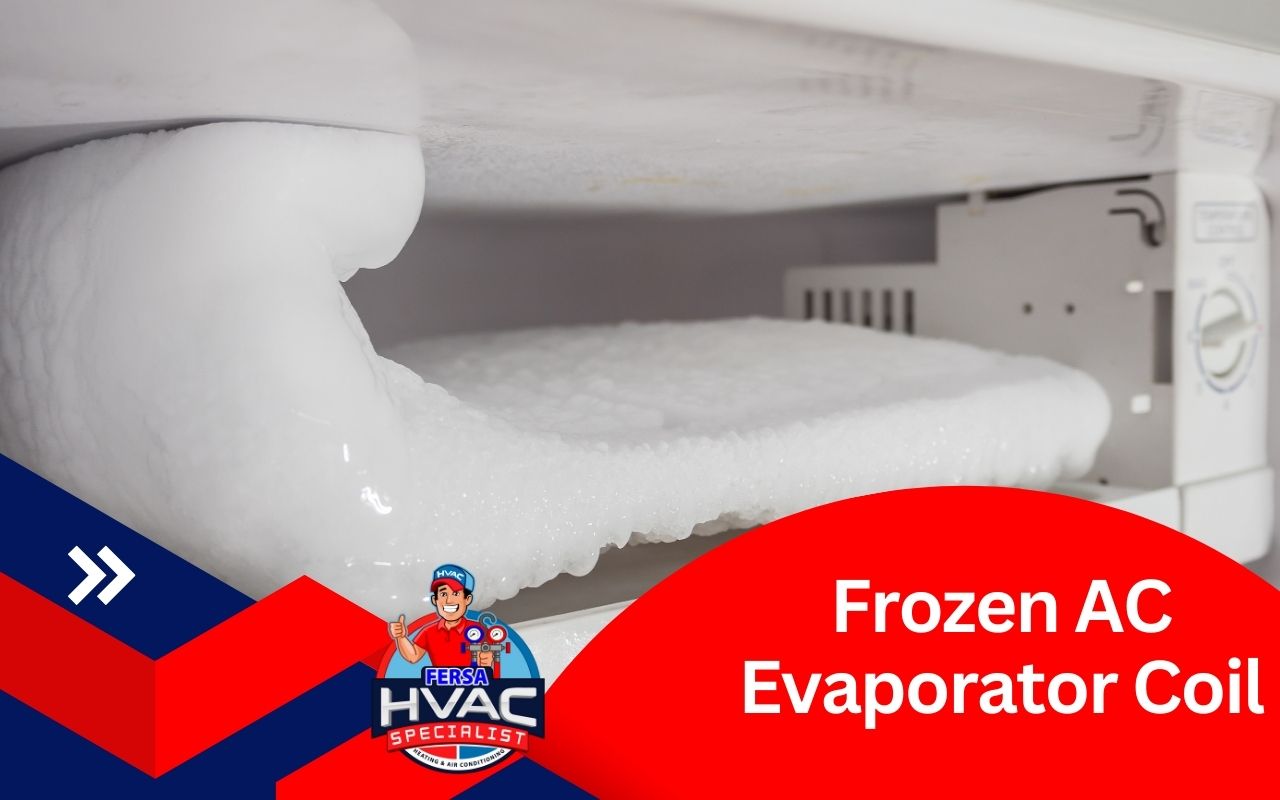
Frozen AC Evaporator Coil
There’s nothing quite like stepping into a refreshingly cool home on a scorching summer day. Yet, for many Plano homeowners, comfort can quickly vanish when facing a frozen AC evaporator coil.
This issue not only disrupts comfort but also leads to costly repairs if left unchecked. Understanding the causes is crucial for maintaining efficiency.
By reading FERSA HVAC Heating Air’s Guide to Troubleshooting Common HVAC Problems in Plano Homes, you can learn practical solutions.
Understanding the AC Evaporator Coil
The AC evaporator coil is the heart of your cooling system. It holds cold refrigerant, which absorbs heat from indoor air.
Warm air passes over the coil, allowing cool air to blow back into your home. However, low refrigerant, obstructed airflow, or mechanical wear can freeze the coil.
A frozen AC evaporator coil occurs when temperature drops too low or moisture freezes into ice. Ice blocks airflow, reducing cooling efficiency.
Unchecked, this stresses the compressor, raises energy bills, and risks permanent damage. Recognizing its function helps in early troubleshooting and maintenance.
Common Causes of a Frozen AC Evaporator Coil
Refrigerant Leaks: Low refrigerant levels cause the coil to drop in temperature, forming ice. Regular inspections prevent freezing.
Poor Insulation: Inadequate insulation around the coil or ducts can cause temperature fluctuations, increasing the risk of ice formation.
Thermostat Misconfigurations: Continuous cooling or low temperature settings make the coil excessively cold, causing freezing.
Refrigerant Leaks: A Coolant Conundrum
When refrigerant levels drop, pressure inside the coil falls, causing freezing. Condensation quickly turns into ice, blocking airflow.
Signs include hissing noises, oily residue, and reduced cooling. Energy bills may increase as the compressor overworks.
Professional repair involves recovering refrigerant, sealing leaks, and recharging the system. Regular maintenance prevents small leaks from escalating.
Poor Insulation: Keeping the Cold In
Proper insulation prevents thermal losses. Poor duct or coil insulation allows warm air in, causing condensation and ice buildup.
Insulation issues hide in attics, crawl spaces, and utility closets. Seal duct joints and wrap lines to maintain consistent temperatures.
Upgrading attic insulation and enclosing the air handler in conditioned space reduces freezing risk and lowers energy use.
Thermostat Troubles: Setting the Right Temperature
Setting the thermostat too low or leaving continuous cooling can freeze the coil. Moderate settings and proper cycling prevent ice buildup.
Use programmable features to maintain cycle lengths and avoid overcooling. Periodic calibration ensures accurate temperature readings.
Avoid fan-on mode as it circulates moisture. Auto-fan allows proper defrost cycles, reducing frozen AC evaporator coil occurrences.
Seeking Professional Help: When DIY Isn’t Enough
Some AC tasks are homeowner-friendly, but a frozen AC evaporator coil often requires professional intervention. Complex issues need certified technicians.
FERSA HVAC Heating Air’s Guide to Troubleshooting Common HVAC Problems emphasizes annual tune-ups with licensed HVAC contractors.
Professionals inspect refrigerant pressures, calibrate thermostats, clean coils, and verify airflow. Early detection restores efficiency and prolongs system life.
If ice persists, call a technician immediately. Expert diagnostics and repairs ensure safe, reliable cooling and protect your investment.
FAQ
How can I prevent my AC coil from freezing during summer? Regularly replace air filters, check insulation, and set moderate thermostat temperatures.
What signs indicate a frozen AC evaporator coil? Reduced airflow, uneven cooling, ice buildup, and higher energy bills are key indicators.
Can I fix a frozen AC evaporator coil myself? Minor issues like cleaning filters are possible, but leaks or compressor problems require professionals.
How often should I schedule professional AC maintenance? Twice a year, ideally spring and fall, ensures proper inspection and prevents frozen coils.
Maintaining a Cool and Efficient AC System
Replace or clean air filters every one to three months. Keep vents unobstructed to maintain airflow and prevent ice formation.
Schedule HVAC tune-ups twice yearly. Technicians clean coils, lubricate parts, check refrigerant, and calibrate controls.
Monitor thermostat settings and energy bills for spikes. Seal ducts and insulate attic or crawl spaces to ensure uniform temperatures.
Combining homeowner upkeep with professional inspections reduces the risk of a frozen AC evaporator coil and keeps cooling reliable and efficient.
For professional assistance, contact FERSA HVAC and schedule an inspection today.